

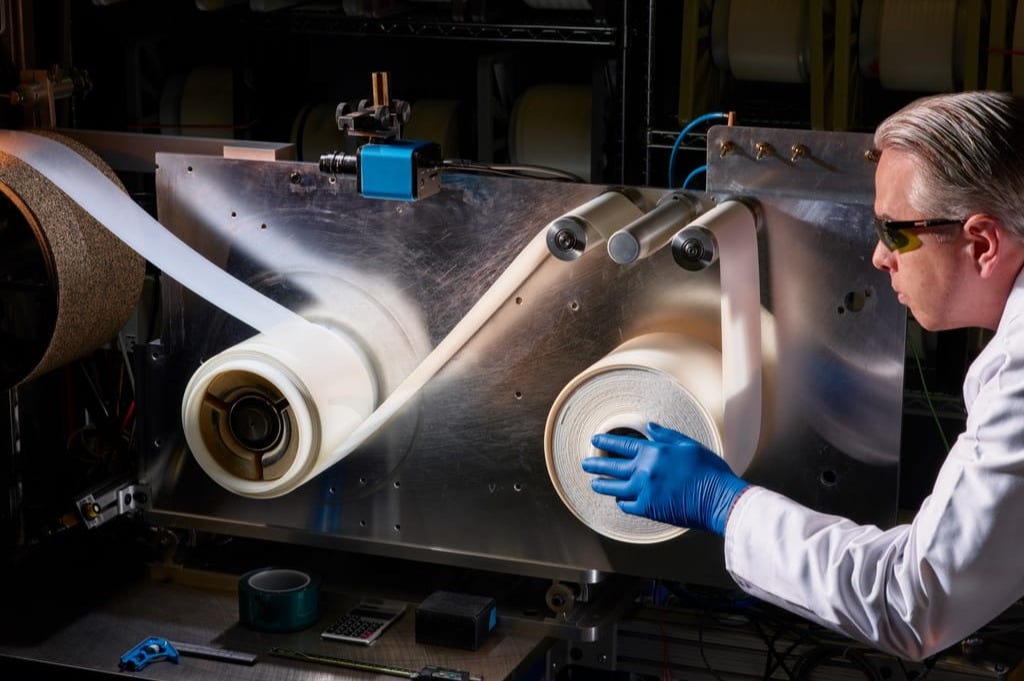

Founded in 1851 in upstate New York, where it remains, Corning is a manufacturer of specialized glass that has a market capitalization of over $100 billion as of October 2026 (GLW), annual revenues approaching $20 billion, and nearly 70,000 employees worldwide.1 Corning is the world’s leading manufacturer of touchscreen glass, one of the world’s leading manufacturers of optical fiber for long-distance telecommunication, the leading U.S. manufacturer of polysilicon for solar panels, and one of two suppliers of glass for extreme ultraviolet (EUV) photomasks needed to make the world’s most powerful chips with ASML machines. Optical fiber is also increasingly crucial to expand the computational capacity of AI data centers with optical networking. Corning is a rare jewel of the American Industrial Revolution that has not just remained competitive to the present day but repeatedly enabled technological transformations: it developed the glass for Thomas Edison’s first light bulbs in the 1880s, invented optical fiber cable in the 1970s, and developed the “Gorilla Glass” touchscreens for Apple’s iPhones that kicked off the global smartphone revolution in the 2000s. Corning’s leading tradition of knowledge in materials science has allowed it to stave off successive waves of competition over the decades from Europe, Japan, and now China.