

This Bismarck Brief will contribute to our exclusive upcoming AI 2026 Bismarck Strategic Report, which will feature in-depth analysis of the state of the artificial intelligence sector and technology, together with a comprehensive profile of key players. Upgrade or subscribe now to receive full access and never miss a report.
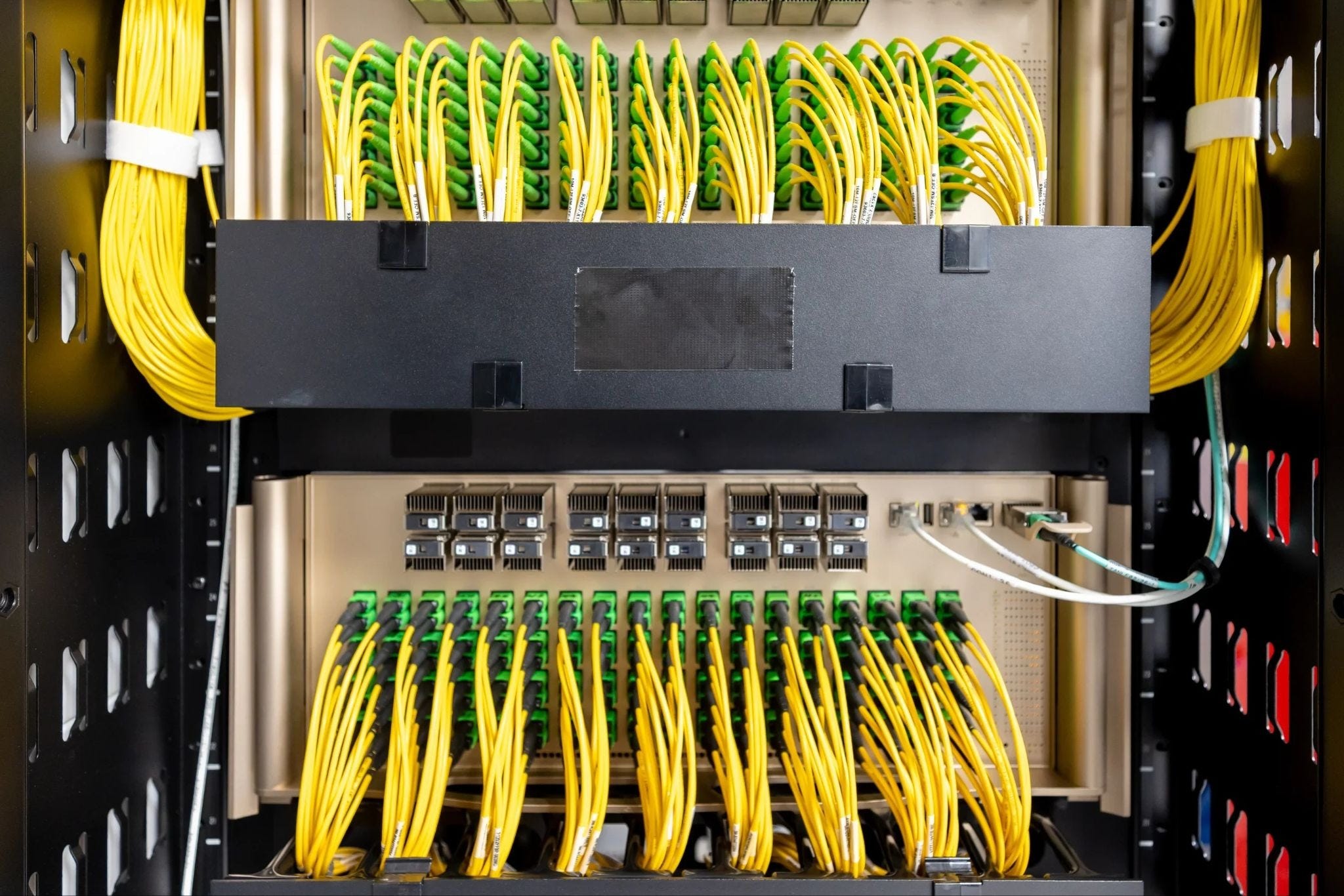
All computing relies on the rapid transmission of signals, from the scale of a single chip to the scale of the global internet. There are essentially two kinds of signals used in digital computing today: electrical and optical. Electrical signals use changes in voltage and current along a transmission line. Optical signals use light. Both of these signals are types of disturbances in the electromagnetic field and so both actually travel at appreciable and comparable fractions of the speed of light in a vacuum, the fastest thing in the universe. Electrical signals are generally transmitted using copper wiring as a conductor, surrounded by insulating “dielectric” material to maintain signal integrity. Optical signals are generally transmitted as light through specialized glass or plastic “fiber optic” cables. Both electrical and optical signals are crucial to the vast computing infrastructure needed for the computing demand of the present day, including for artificial intelligence. Broadly, electrical signals are used at short distances while optical signals are used at long distances, but semiconductor companies are exploring ways to integrate the advantages of optical components into more parts of the technology stack of AI data centers.