

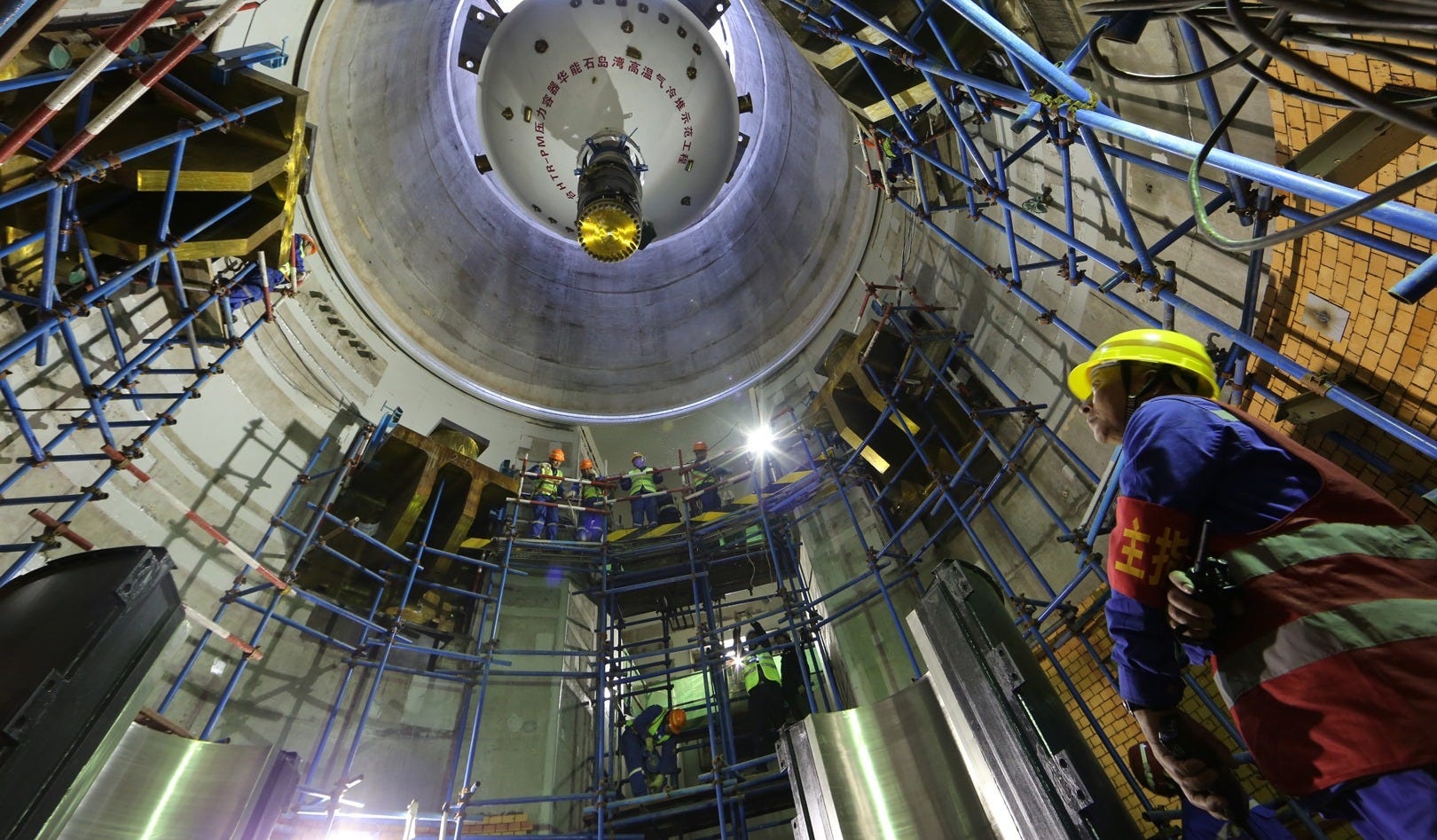
Small modular reactors (SMRs) are classified by industry convention as nuclear reactors with the capacity to generate up to 300 megawatts (MW) of electricity—as opposed to the conventional 1 gigawatt (GW) size of a reactor—and that are designed at least to some significant degree for mass production and assembly of parts.1 These reactors are meant to offer a number of advantages over conventional gigawatt-scale nuclear plants: smaller upfront investment, lower construction costs due to standardized manufacturing, and faster deployment timelines. In the face of geopolitical energy crises and rising electricity demand from AI data centers, the second Trump administration is attempting to catalyze a major expansion of nuclear power, what it calls a “nuclear renaissance.”2 By executive order, President Donald Trump has explicitly set a target of increasing U.S. nuclear capacity from 100 GW to 400 GW by 2050.3 Yet, with large-scale conventional nuclear plant construction apparently all but impossible in the United States, renewed interest in nuclear power is instead being predominantly directed towards the research, development, and construction of small modular reactor concepts.