

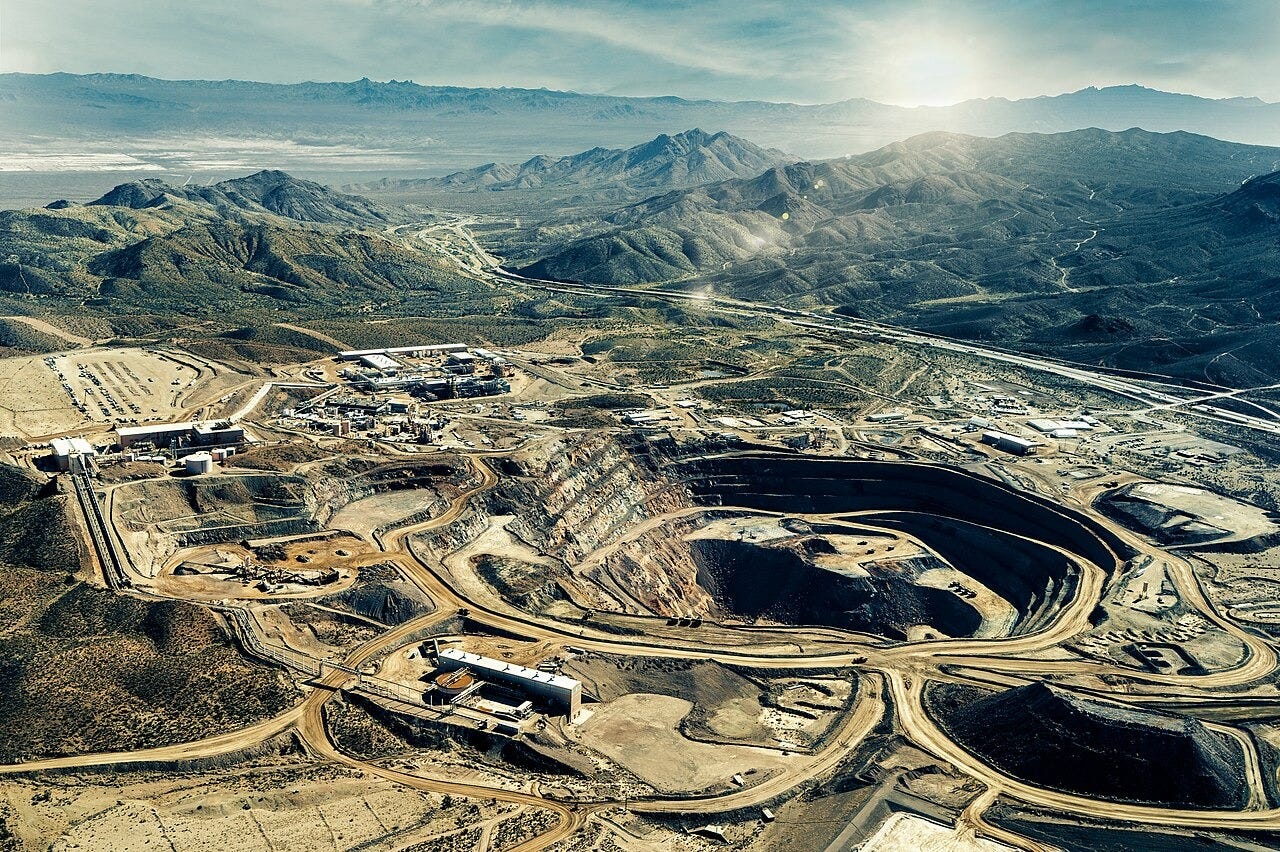

Rare earth elements (REEs) are seventeen chemical elements with a wide range of critical uses across industry and electronics due to their unique magnetic and conductive properties. They are key to electronics when used for batteries, magnets, and luminescence, for example in the displays of smartphones and computers or in military sensors, as well as in the motors of electric vehicles. Rare earths are also commonly used as catalysts in automobiles and oil refining, and are used industrially to produce high-quality steel and glass. The term “rare earth element” is a misnomer: rare earths are generally more geologically abundant than many commonly used commodity metals like copper, tin, and lead. While rare earth deposits are mined much like any other mineral is mined, the bottleneck on rare earths is rather the concentration and purity of natural deposits and the need to refine mined minerals with energy-intensive processes. In 2025, China had an estimated 92.1% share of global rare earth refining capacity.1